



Resource allocation for edge and IoT systems
The SCOPE Research Group is part of the Department of Computer Science at the Gulf University for Science and Technology (GUST), Kuwait. Its work concerns how computation, communication and sensing resources are allocated between IoT devices and nearby edge servers.
Current topics include task scheduling on edge systems, context-aware service composition in mobile IoT networks, UAV-assisted data collection, runtime security for IoT devices and the Internet of Vehicles. Methods include integer programming and decomposition, heuristics, reinforcement learning and graph neural networks.
The group is funded by the Kuwait Foundation for the Advancement of Sciences (KFAS) and GUST, and collaborates with McGill University, the University of Ottawa, the University of Southern California and Ericsson.
Research areas
Edge computing and scheduling
Scheduling of machine-learning pipelines and time-critical tasks on edge servers, including fault tolerance and synchronization.
Read more 02IoT orchestration and UAVs
Context-aware composition of sensing, computing and actuation services in mobile IoT networks, and UAV-assisted data collection.
Read more 03IoT security
Automaton-based runtime vulnerability analysis for IoT devices, with reinforcement learning to balance security and availability.
Read more 04Internet of Vehicles
Information freshness for cooperative driving, vehicular workload scheduling, EV charging and routing, and patrol scheduling.
Read more 05AI for health
Graph neural networks applied to gait and EEG data for the diagnosis of Parkinson's disease and dementia.
Read more 06Methods
Integer programming and decomposition, metaheuristics, reinforcement learning and graph neural networks.
Read more
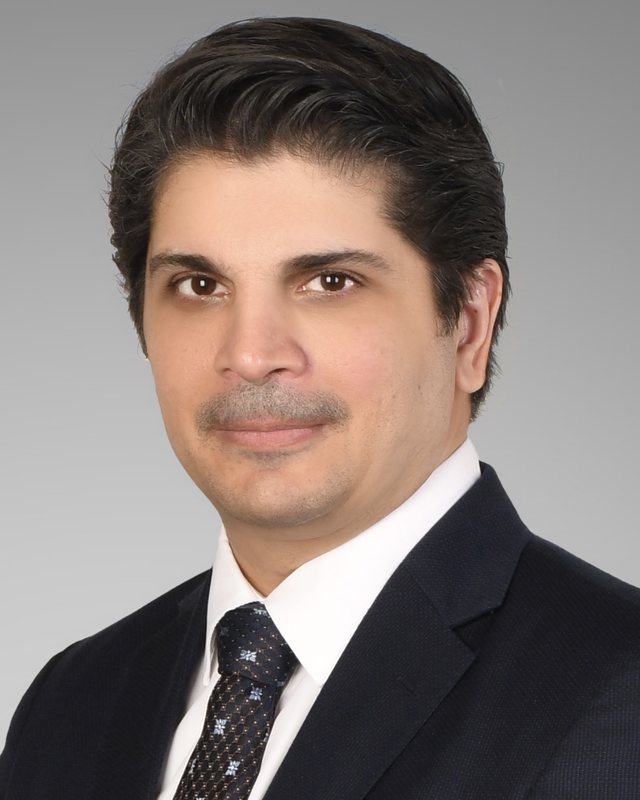
Dr. Ebrahim Sarkhouh
Assistant Professor of Computer Science · Publishes as Ibrahim Sorkhoh
Dr. Ebrahim Sarkhouh is an Assistant Professor in the Department of Computer Science at GUST, where he leads the SCOPE Research Group. His research addresses resource scheduling, service orchestration and security in edge computing and IoT systems, including the Internet of Vehicles, using discrete optimization and machine learning.
Before joining GUST he was a Mitacs Postdoctoral Fellow at McGill University in collaboration with Ericsson; this work produced two patent applications on edge task scheduling and fault tolerance. He holds a Ph.D. in Computer Science from Concordia University, Canada, with a thesis on workload scheduling in MEC-assisted intelligent transportation systems, and B.Sc. and M.Sc. degrees in Computer Engineering from Kuwait University.
He reviews for IEEE JSAC, IEEE Transactions on Mobile Computing, IEEE Transactions on Intelligent Transportation Systems, IEEE Transactions on Vehicular Technology and the IEEE Internet of Things Journal, among other venues.
- 2024 – presentAssistant Professor, Computer Science, GUST
- 2022 – 2024Postdoctoral Fellow, McGill University and Ericsson, Canada
- 2017 – 2021Ph.D. Computer Science, Concordia University, Canada
- 2006 – 2009M.Sc. Computer Engineering, Kuwait University
- 2002 – 2006B.Sc. Computer Engineering, Kuwait University
News
Two KFAS applied research grants begin
Funded projects on autonomous IoT security and on service composition for MANET IoT applications.
Paper at IEEE HPSR 2026
Ahead-of-time scheduling of heterogeneous ML pipelines with timing and communication constraints on edge systems.
Two GUST seed grants begin
One-year projects on adaptive UAV-based data collection and on GNN-based diagnosis of neurodegenerative disease.
Four conference papers in 2025
Published at IEEE NoF, IEEE ISIE (two papers) and an IEEE ICC 2025 workshop.
Recent publications
Partners
Prospective students
GUST students interested in edge computing, IoT systems or optimization may contact Dr. Sarkhouh with a CV and a short statement of research interests.